

 Fishician®
Nutrition
Feeding aquarium fish without guesswork
Feeding is where care and water quality meet. What you feed, what gets eaten and what's left behind all change the tank.
The short answer
- Needs differ by species and age. Carnivores, herbivores and omnivores eat differently; juveniles and breeders need more.
- No universal portion. Set it from what gets eaten, body condition and your test results.
- Overfeeding is a water problem. Uneaten food rots into ammonia and feeds algae.
- Watch who gets food, not just how much goes in. Shy or slow fish can starve in a well-fed tank.
- Food goes stale. Fats oxidize and vitamins fade. Buy what you'll finish.
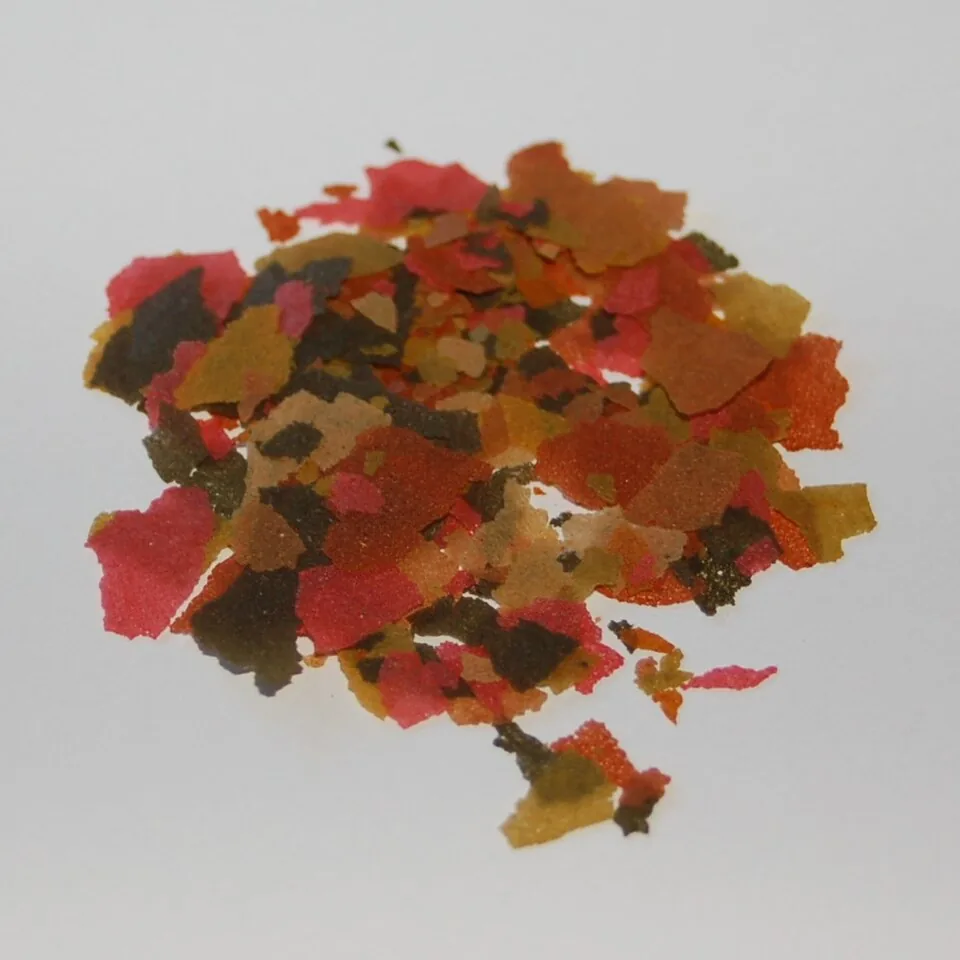

Feeding habits that help or hurt
Do
- Match food to species and life stage
- Sinking food for bottom dwellers
- Remove food that sits uneaten
- Track body condition over time
- Store food sealed and cool
Avoid
- One generic "tropical" food for all
- Treats replacing the staple
- Feeding more to fix refusal
- Fasting on internet advice when fish are ill
- Trusting an untested auto-feeder
Read the label
- Intended species and life stage.
- Particle size, and whether it floats or sinks.
- Ingredients and guaranteed analysis; ingredient quality affects digestion.
- Date and storage instructions. More in reading a food label.
Variety with a purpose
- A good staple for the species does the main work.
- Add variety to reach fish a single food misses, or for natural feeding behaviour.
- Live and frozen foods help but need careful sourcing, handling and thawing.
- Grazing diets vary: some fish eat algae, others biofilm or small animals. Match food to the species.
Signs to adjust
- A consistently swollen belly, or thinning behind the head.
- Food left over after feeding.
- Nitrate or algae rising faster than maintenance keeps up. See water parameters.
- New fish refusing food is common; long refusal is worth investigating, not overfeeding.
Special situations
- Growing fry, breeding adults and fish at the edge of their temperature range have different needs.
- Temperature changes appetite because it changes metabolism.
- Auto-feeders can jam or dump, and slow-release holiday blocks can change water chemistry. Test them before relying on them.
- Log what you feed, what's refused, what's left over, body condition and your test trend.
Sources
Each source is listed with the part of this guide it supports.
- University of Florida IFAS: Fish NutritionNutrient requirements, protein and energy in fish diets, and how species and life stage change dietary needs.
- Merck Veterinary Manual: Management of Aquarium FishFeeding practice, overfeeding as a water-quality failure, and uneaten-food removal.
- University of Florida IFAS: The Benefits of Fishmeal in Aquaculture DietsIngredient quality, palatability, and why formulated diets differ in digestibility and nutrient availability.