

 Fishician®
Nutrient management
Managing aquarium algae
Algae grows in freshwater and saltwater aquariums. Start with light, feeding, water tests and removal, then match any further action to your tank and the growth you're seeing.
The short answer
- Some algae is normal in both water types. Address excessive growth, not every trace of it.
- Check nutrients, not just the glass. Nitrifying biofilters convert ammonia through nitrite to nitrate; nitrate control needs separate attention.
- Match light to the tank. Plants and photosynthetic corals still need suitable light; blanket blackouts are not a general fix.
- Heavy growth and die-off can lower oxygen. Unusual gasping or rapid breathing needs immediate attention.
- For routine adjustments, change one thing at a time and record the results. Don't delay help for distressed animals.
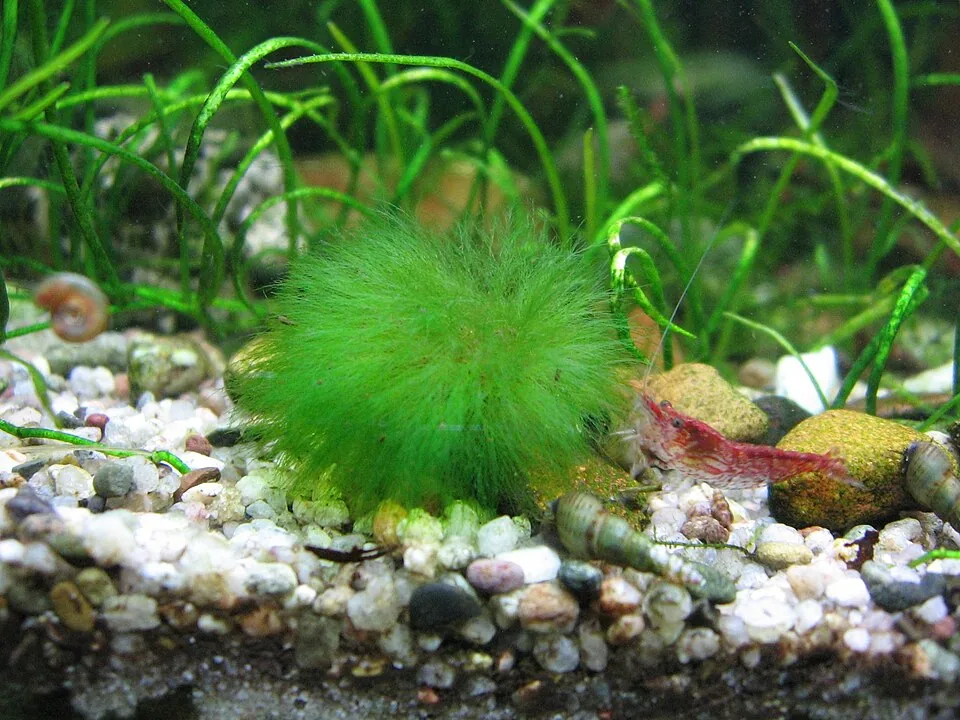

Check the basics before choosing a treatment
- Check feedingMeet dietary needs; remove leftovers
- Export wasteSiphon detritus, clean mechanical media
- Test waterTrack nitrate and phosphate, including source water
- Check lightingReview the timer, intensity and daylight
- Respect the systemKeep plants' or corals' needs in view
- Check circulationRemove debris and service clogged equipment
Manual removal counts
- Scraping, siphoning and pruning take out the nutrients locked in the algae.
- Do it during a water change so it leaves the tank instead of spreading.
- Check lights, timers and covers while you're there.
Careful with quick fixes
- Algaecides: check the exact product's water-type and animal restrictions, and follow its label. A freshwater product or dosing method is not automatically suitable for a reef.
- Remove dead growth. Its decomposition can increase oxygen demand. If fish gasp unusually or breathe rapidly, check circulation, improve aeration promptly and test water; seek aquatic veterinary help if distress continues.
- "Cleanup crew" animals have their own size, diet and compatibility needs, and add waste. An animal is not an appliance.
Freshwater planted tanks: help plants grow
- Healthy plants use nutrients too. Stalled growth calls for a review of plant selection, light and nutrition, not an automatic cut to every fertilizer.
- Check for deficiencies before changing dosing. This planted-tank approach is not a recipe for a marine fish-only or reef tank.
- See planted tank basics and lighting.
New tanks go through a phase
- Unattractive growth is common while things settle.
- Keep up cleaning and tests; avoid big swings in light or dosing. Animal distress is not a normal new-tank phase.
- Log light hours, feeding, water changes and tests as you adjust.
Where the nutrients come from
- Food, waste and decay can add nitrogen and phosphorus. Test rather than assuming nitrate and phosphate will rise together.
- Food or waste trapped in mechanical media keeps dissolving into the water.
- Remove dead fish and decaying plant material promptly.
- Review excessive light duration and direct sunlight, while meeting the needs of the plants or photosynthetic animals you keep.
- Heavy algal growth respires when the lights are off; decay also consumes oxygen. Maintain circulation and respond promptly to breathing distress.
Sources
Each source is listed with the part of this guide it supports.
- Seachem: Algae Control in the Planted AquariumFreshwater planted scope: plant nutrient and lighting needs, and why indiscriminate nutrient reduction can impair plant growth.
- Red Sea: Reef Care ProgramMarine nuisance algae and coral symbionts both use nitrate and phosphate; nutrient control must preserve coral needs.
- Red Sea: Light Intensity and PhotoperiodPhotosynthetic corals need appropriate light and dark periods; both inadequate light and overexposure affect coral health. No universal hours or PAR prescription is adopted.
- Fauna Marin: Dinoflagellates in a Saltwater AquariumConfirm suspected marine dinoflagellates and distinguish other growth before targeted treatment; microscopy supports identification. This guide does not adopt the product treatment protocol.
- API: Marine AlgaeFix InstructionsAn example of marine-specific algae treatment directions: follow its own label, avoid overdosing and remove dead algae; freshwater and marine treatments are not assumed interchangeable.
- University of Florida IFAS: Ammonia in Aquatic SystemsNitrogen loading from feed and waste, and how dissolved nutrients accumulate in a closed system.
- University of Florida IFAS: Dissolved Oxygen for Fish ProductionPhotosynthesis and respiration driving daily oxygen swings when algal biomass is high.
- Merck Veterinary Manual: Essential MaintenanceRoutine cleaning, waste removal, and lighting and equipment checks in a maintenance schedule.