

 Fishician®
Saltwater track
Starting a saltwater aquarium
Saltwater asks for more patience, more equipment and more precise measurement. That is the shape of the commitment, not a reason to avoid it.
The short answer
- Pick the system type first. Fish-only, fish with live rock, or reef. Lighting, filtration and precision differ.
- Budget the whole system. Include salt, water preparation, salinity measurement and filtration. Skimmer and lighting needs depend on the system.
- Measure salinity, don't guess. Use a calibrated refractometer, never scoop counts.
- Top off with fresh water. Evaporation leaves salt behind; topping off with saltwater slowly raises salinity.
- Go slow and quarantine. Many treatments can harm invertebrates or biofiltration. Use a separate treatment tank when directed by the label or veterinarian.
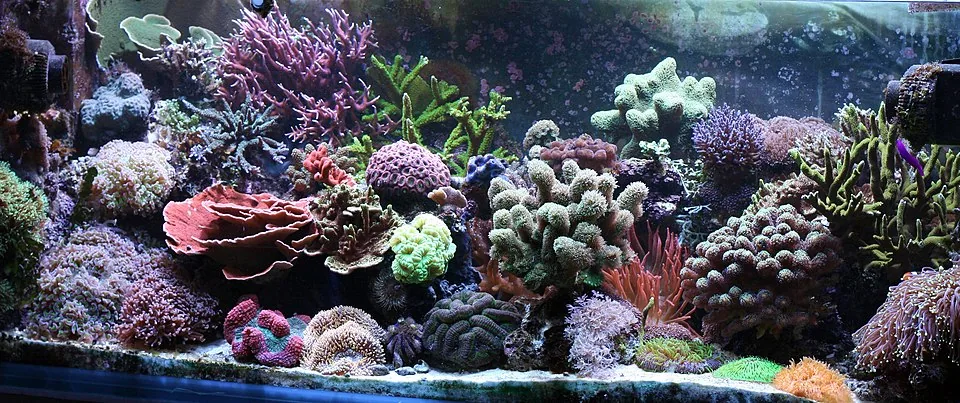

Three kinds of saltwater tank
Fish only
- Suitable salinity control; simpler lighting
- Simpler lighting
Fish + live rock
- Rock carries much of the biofilter
- Moderate equipment
Reef
- Match lighting to each coral’s needs
- Least tolerance for swings
Mix and measure
- Mix synthetic sea salt into dechlorinated fresh water with circulation until fully dissolved.
- Measure salinity with a calibrated refractometer.
- Match temperature and salinity before any water goes into the tank.
Cycle with real verification
- Suitable mature media, live rock or a bacteria product may seed the biofilter. An ammonia source feeds those microbes; it does not supply them.
- Prove it with ammonia and nitrite tests, as in the cycling guide. A marine cycle is not reliably faster or slower.
- Maintain circulation. Follow the cycling product’s instructions for skimmers and other equipment.
Rock is part of the filter
- Colonized rock brings bacteria, plus organisms you did not choose and decaying material.
- Dry rock avoids that but starts with no bacteria, so it needs the full cycle.
- Build it stable on the tank floor, off the glass, with room for a siphon and net.
- Removing lots of rock at once is a biological event. Stage it. See substrate and hardscape.
Keep the salinity reading honest
- Follow the exact instrument’s calibration instructions: some require distilled or deionized water; others use a specified salinity standard.
- Rinse and dry it after use; note when it was last calibrated.
- When a reading surprises you, check the instrument before the water.
Expect a longer runway
- Add hardy, well-researched species first, one at a time, testing after each.
- Wait until readings have held steady for a while before coral or delicate fish.
- Consistent testing and a written record beat any single piece of equipment. See reef tank basics.
Budget honestly
- Budget for salt mix, water preparation, salinity measurement and suitable filtration. A protein skimmer and specialized lighting depend on the animals and system.
- Check filtration and waste-removal needs for your stocking plan before choosing equipment.
- Every water change uses salt and prepared water, so budget for them on an ongoing basis.
Sources
Each source is listed with the part of this guide it supports.
- Hanna Instruments: HI96822 Seawater RefractometerA model-specific example requiring distilled or deionized water for zero calibration; calibration instructions cannot be generalized across instruments.
- Merck Veterinary Manual: Providing a Home for FishWater preparation, filtration, and environmental setup considerations that apply to marine systems.
- Merck Veterinary Manual: Management of Aquarium FishCycling, gradual stocking, quarantine, and water-quality monitoring relevant to a new marine system.
- University of Florida IFAS: Dissolved Oxygen for Fish ProductionTemperature and salinity effects on dissolved oxygen, relevant to marine system stability.